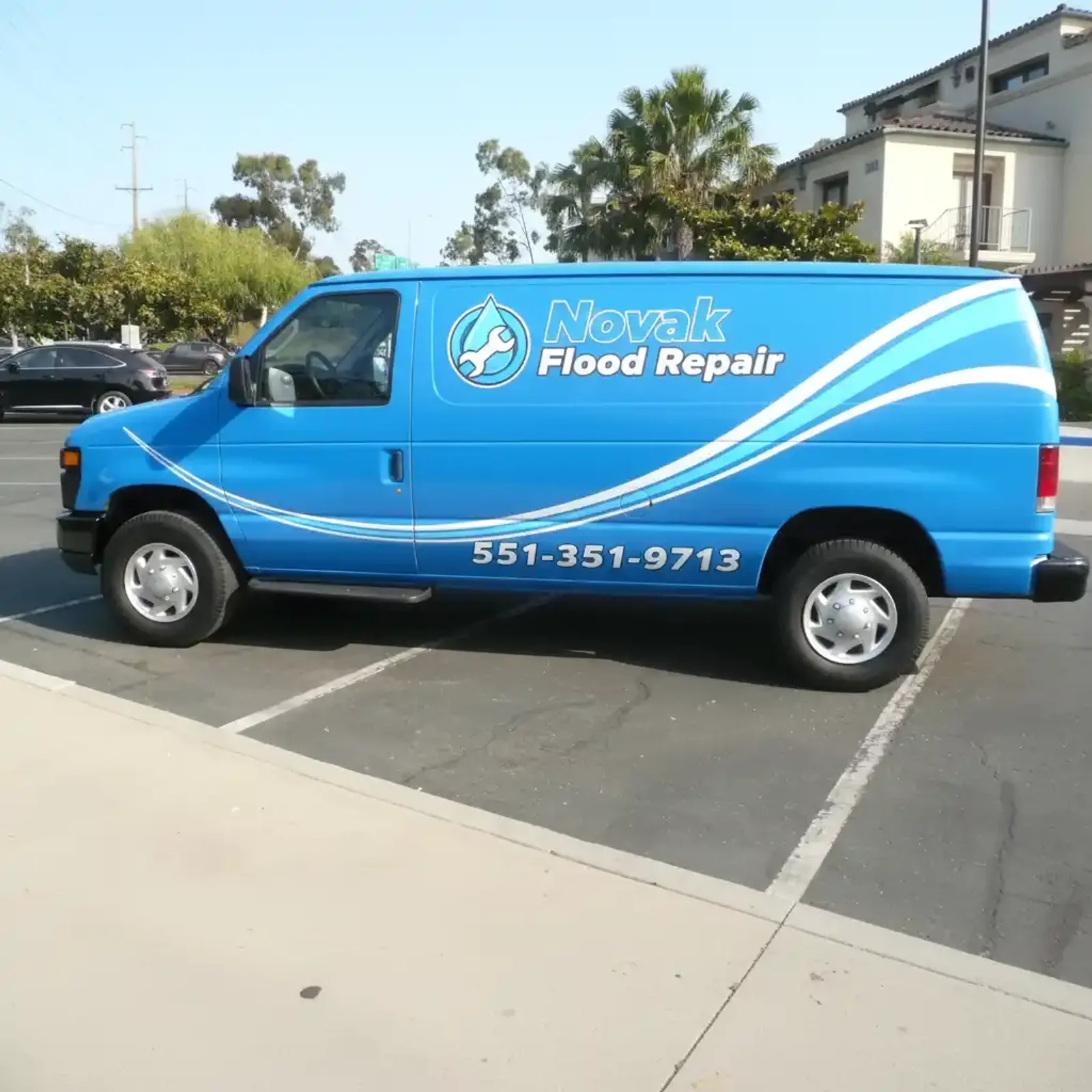
A leak that ran overnight in Englewood can leave the carpet dry to the touch while the pad and subfloor underneath stay soaked for days. Novak Flood Repair shows up with calibrated meters and high-volume extraction gear, then maps the full wet footprint before deciding what to pull and what to dry in place. Older Englewood foundations and field-stone walls wick moisture differently than poured concrete, and the drying plan accounts for it. We capture the wet boundary, the demolition performed, and the final clearance numbers so no part of the claim relies on memory. Ring 551-351-9713 and we will be pulling water in Englewood before it spreads further.
- 24/7 emergency dispatch
- Truck-mounted extraction
- Industrial drying equipment
- Daily moisture documentation
- Insurance scope-aligned reconstruction
- IICRC S500 protocol
The First Move On Every Water Call
The visible water is the part that is easy to remove; the rest takes equipment. Older plaster and layered subfloors trap moisture between materials, hiding it from anyone working off appearance instead of readings.
We dry the envelope methodically, rechecking the bottom plate and subfloor where water always hides longest before pulling equipment. We capture the cause, the wet footprint, and the final clearance numbers so nothing about the claim relies on memory.
The Daily Discipline Of Drying
Hardwood, drywall, and concrete each have their own dry standard, and we hold each to its own. Air movers and dehumidifiers are placed to the assembly, then repositioned as the readings dictate over successive days.
Older homes hold moisture longer, so we monitor daily and reposition equipment until each reading is at baseline. Verified-dry on paper is what keeps the rebuild from sitting on top of moisture that was never resolved.
A single contract for the work
A property loss in Englewood rarely stays in one lane — water damage restoration often overlaps with soot removal, storm cleanup, mold inspection and removal, biohazard cleanup, structural rebuild, and our crew handles all of it under one contract. We dispatch the same standard to Water Damage Restoration in Teaneck, Fort Lee water damage restoration, Hackensack water damage restoration, Water Damage Restoration in Bergenfield and everywhere else across Bergen County.
If you searched for local emergency restoration, you have reached a local team — call 551-351-9713 any hour. For background, read Why Bergen County Basements Flood: Diagnosing the Source Before You Clean Up on our blog, or head back to our Englewood home page to see everything we do.